Flagship procurement research
Why Semiconductor Procurement Is Difficult
Reviewed by Enzo Parilli · Updated August 2, 2026 · Editorial policy
Executive summary
Why can a technically correct component requirement still fail in procurement?
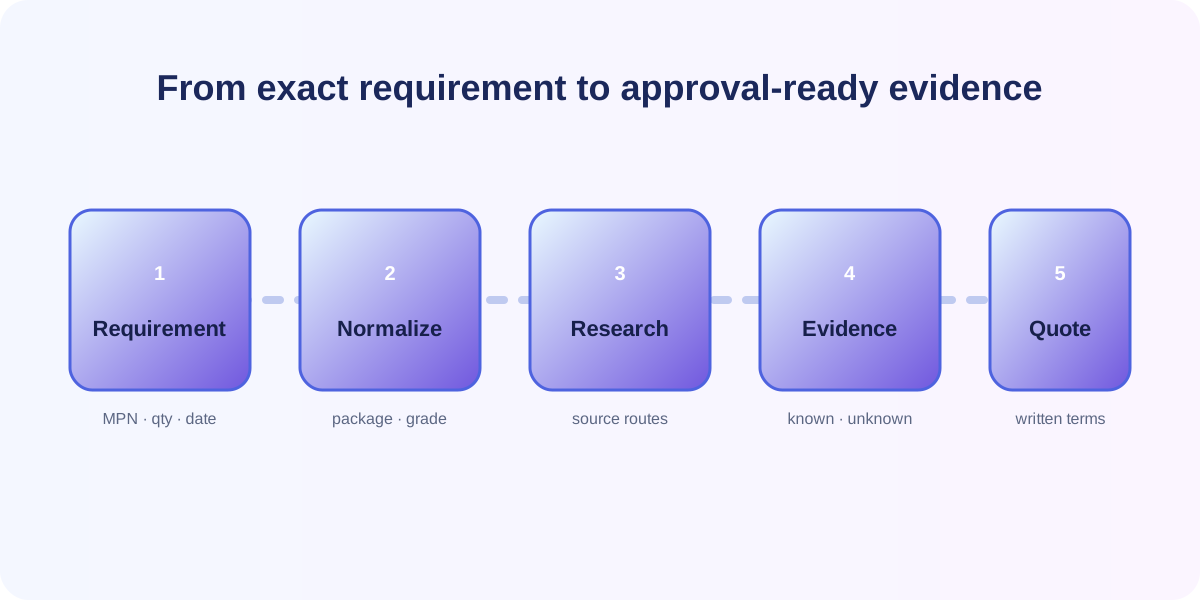
A procurement request can fail when the exact MPN, suffix, package, grade, quantity, date code, source route, documentation, and delivery conditions are not preserved together. The result is often a comparison between non-equivalent offers or a promise that has not been confirmed for the specific lot. Max treats sourcing as an evidence and approval workflow, not as a generic catalog search.
Fragmented supplier ecosystem
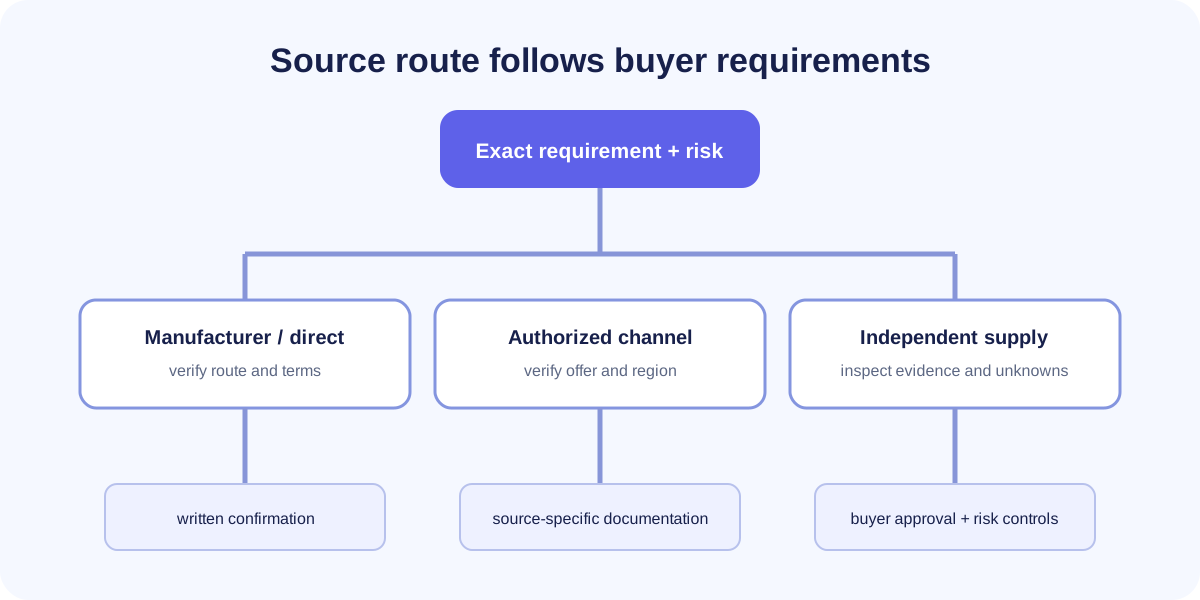
A single BOM can cross manufacturer-direct, authorized distribution, aftermarket, independent distribution, broker, marketplace, and repair channels. Each route may carry different evidence, commercial conditions, inspection needs, and delivery assumptions.
Authorized, aftermarket, and independent channels
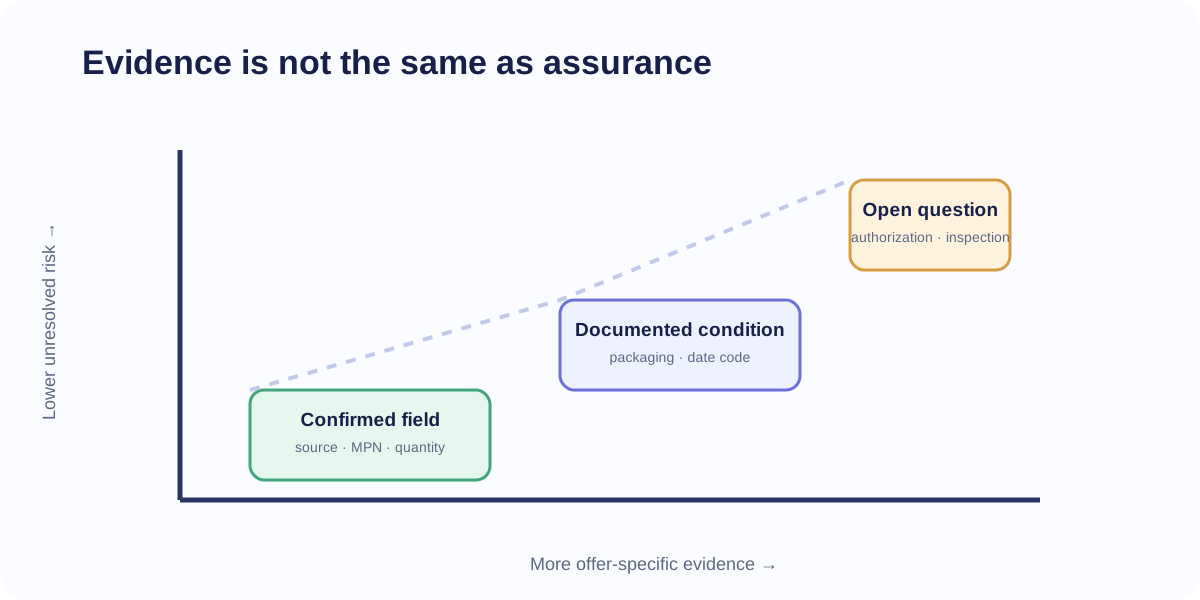
The route label is a starting point, not a substitute for offer-specific evidence. A buyer should know who is represented, what documentation exists, whether the material is factory-sealed, and which claims remain unresolved.
MPN and ordering-code complexity
A shortened part number can hide package, speed, temperature, tape-and-reel, automotive, revision, or regional suffixes. The exact ordering code controls compatibility and should remain intact from BOM intake through quote approval.
Packaging, grade, and temperature suffixes
- Confirm package and case, moisture sensitivity, packing format, temperature grade, environmental grade, and quantity increment.
- Do not treat a family-level match as a drop-in replacement.
Inventory inconsistency, allocation, and long lead times
A listing, a supplier statement, and a confirmed deliverable offer are different states. Quantity, evidence date, split-shipment rules, allocation, and supplier processing can change the practical schedule.
BOM complexity and match ambiguity
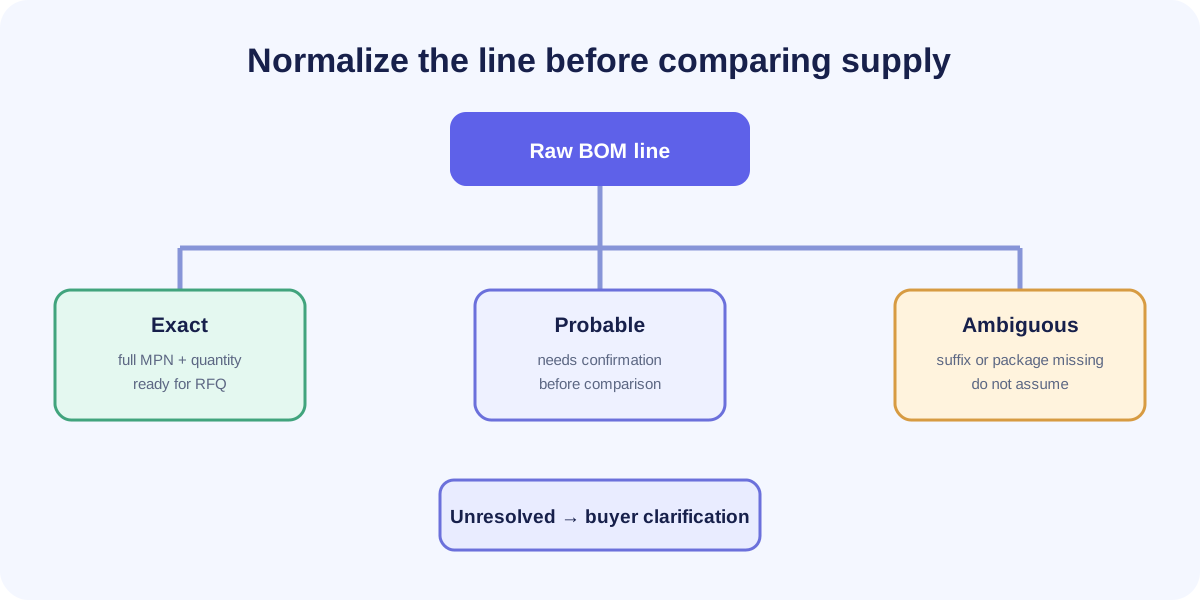
- Exact: complete MPN and requirements are clear.
- Probable: a candidate exists but a suffix, package, revision, or application detail needs confirmation.
- Ambiguous: multiple interpretations are possible.
- Unresolved: do not compare or quote as equivalent until the buyer clarifies the requirement.
Obsolescence, EOL, NRND, PCN, and last-time-buy risk
Lifecycle status is not the same as availability. EOL or NRND information should trigger a documented decision: remaining supply, manufacturer replacement, redesign, last-time-buy quantity, or an approved alternate.
Counterfeit and misrepresentation risk
Counterfeit risk increases when source identity, chain of custody, packaging, date code, markings, and inspection evidence are unclear. A logo, certificate, or marketplace listing alone does not prove authenticity for a specific offer.
Traceability and documentation
- Ask which documents are available for the quoted lot, not only what a supplier generally provides.
- Separate certificate of conformance, traceability, inspection, compliance, and authorization claims.
- Record missing or conditional documents as unknowns.
Compliance and export requirements
End use, destination, export classification, restricted-party screening, RoHS/REACH status, and customer-specific controls may affect what can be quoted. The governing program or authority must be identified rather than inferred from a generic badge.
Manual RFQ processes and supplier qualification
Email-based workflows can lose MPN suffixes, evidence dates, approval conditions, and unanswered questions. A repeatable intake and evidence record reduces that loss without pretending to automate engineering qualification.
Data silos and production-line interruption
Engineering, procurement, quality, operations, and finance may each hold part of the decision. A sourcing record should keep the technical requirement, commercial option, evidence, and approval boundary together.
Excess inventory and demand mismatch
Excess or obsolete inventory may have value only when part identity, condition, quantity, buyer restrictions, and commercial path are clear. A listing does not create a buyer or a guaranteed liquidation outcome.
AI and data-center demand changes the system boundary
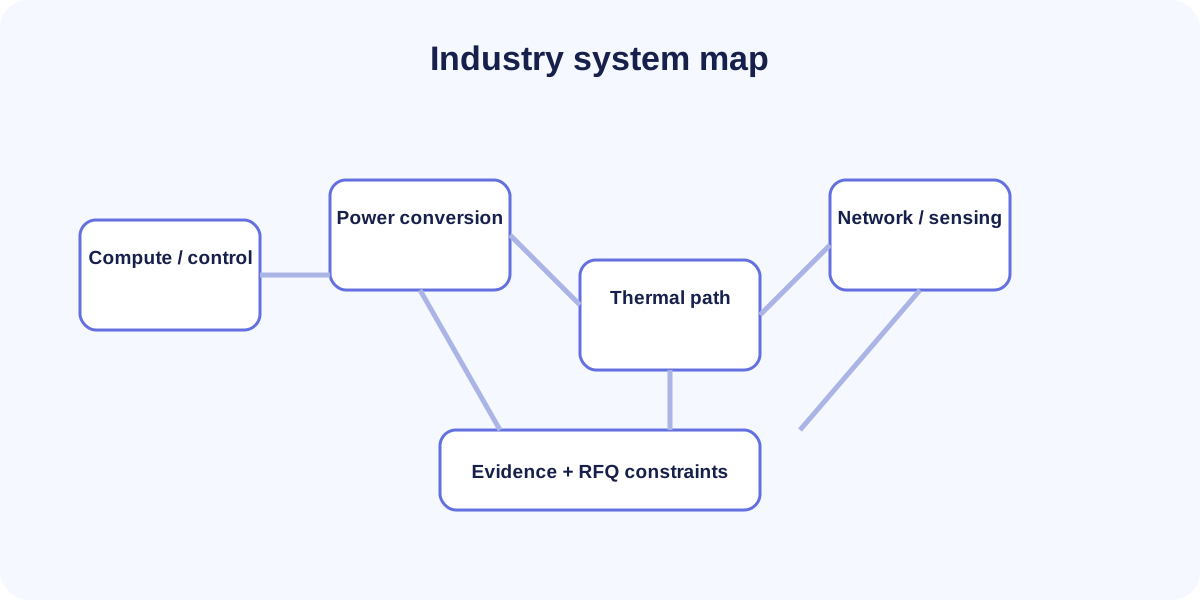
Compute requirements connect GPU and CPU choices to memory, networking, rack power, UPS, PDU, switchgear, transformer, generator, and cooling constraints. A component-only RFQ can miss the dependency that controls the schedule.
What transparent procurement orchestration can improve
- Exact requirement preservation
- Explicit source-route classification
- Evidence and unknown disclosure
- Buyer approval checkpoints
- Cross-functional RFQ context
- A written record that separates confirmed facts from assumptions
What Max cannot guarantee
Max does not guarantee inventory, price, lead time, authorization, authenticity, compliance, engineering fit, or delivery merely because a request is submitted or a listing exists. Those claims require offer-specific confirmation and, where relevant, buyer or engineering approval.