Memory comparison
SRAM vs. DRAM: Memory Architecture and Procurement
Reviewed by Enzo Parilli · Updated 2026-08-02 · Editorial policy
Direct answer
What is the difference between SRAM and DRAM?
SRAM stores state without the refresh cycle used by DRAM and is often selected for low-latency cache or buffer roles, while DRAM provides higher density with refresh and controller considerations. The right choice depends on architecture, interface, timing, power, and lifecycle.
At-a-glance comparison
| Dimension | Option A | Option B |
|---|---|---|
| Density | Lower density, low-latency role | Higher density working memory |
| Refresh | No DRAM-style refresh | Refresh and controller requirements |
| RFQ risk | Organization, interface, package | Timing, interface, refresh, package |
Option labels summarize the comparison topic; the full engineering and procurement requirement controls the final decision.
Architecture and use
- SRAM: low-latency memory for caches, buffers, and control paths.
- DRAM: higher-density working memory with refresh and system-controller requirements.
RFQ checklist
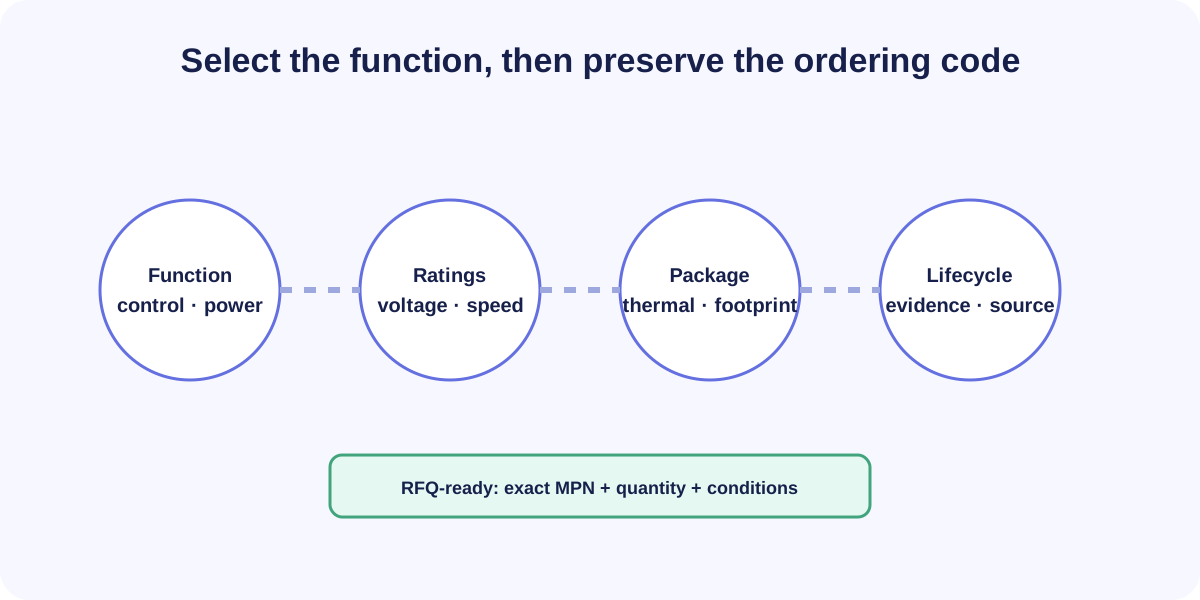
- Density, organization, speed grade, interface, voltage, package, and temperature
- Qualification, lifecycle, date code, packaging, and acceptable memory substitution
- Board, firmware, signal-integrity, and controller compatibility