Component comparison
MCU vs. MPU: Choosing a Microcontroller or Microprocessor
Reviewed by Enzo Parilli · Updated 2026-08-02 · Editorial policy
Direct answer
What is the difference between an MCU and an MPU?
An MCU usually integrates a processor core with memory and peripherals for embedded control, while an MPU generally relies on external memory and a more capable operating environment. The correct choice depends on real-time behavior, software stack, power, interfaces, security, and lifecycle requirements.
At-a-glance comparison
| Dimension | Option A | Option B |
|---|---|---|
| Integration | Memory and peripherals commonly integrated | External memory and broader system dependencies |
| Typical role | Embedded control and deterministic interfaces | Richer operating systems and compute |
| Main review | Peripherals, power, package, lifecycle | Memory, software, thermal, and board design |
Option labels summarize the comparison topic; the full engineering and procurement requirement controls the final decision.
Use-case differences
- MCU: deterministic control, integrated peripherals, lower system complexity, and often lower power.
- MPU: richer operating systems, higher compute headroom, external memory, and more board-level dependencies.
Procurement implications
- Confirm memory, package, temperature, security, peripheral, and software-support requirements.
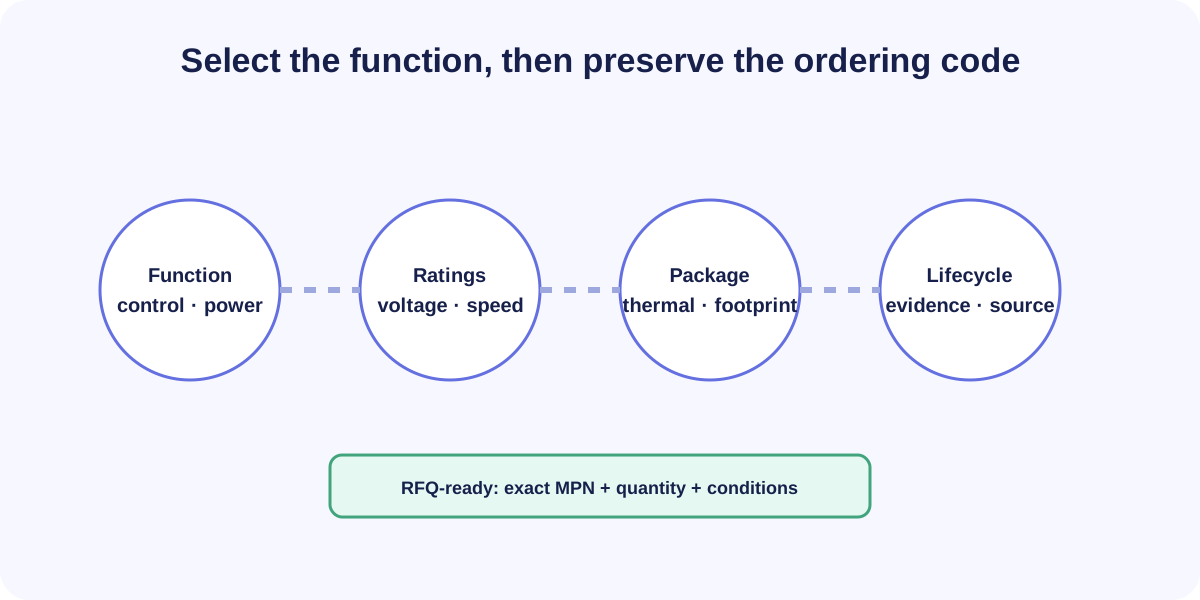
- Treat a family name as insufficient; the full ordering code and revision still control the RFQ.